
MagicSchool is worth considering when you want a teaching-focused starting point for lesson preparation rather than a blank general-purpose chat. The buying decision is less about how many generators it offers and more about whether a draft fits your curriculum, how much correction it needs, and which plan supports your intended classroom workflow.
Documentation-based assessment · How we reviewed it
Official demo / learning resources ↗
A useful shortlist for teacher preparation—with review time built in
Start with one lesson you already teach well. Use MagicSchool to propose a different structure, then check the objective, activities and assessment against your existing version. A faster first draft is valuable only when the final resource remains accurate and teachable. Our documentation-based assessment supports a small evaluation; it does not establish time savings, classroom safety or better student outcomes. Individual preparation and a school-wide student rollout deserve different decisions.
- Best fit
- Teachers preparing lessons, rubrics and classroom materials
- Review scope
- Teacher preparation, classroom resources and adoption decisions
- Main watch-out
- A polished lesson still needs curriculum and factual checks.
In this review
Who should consider MagicSchool?
Consider it if you repeatedly assemble lessons, feedback criteria or differentiated materials and can explain what a good result looks like. An experienced subject teacher is better placed to judge a plausible but unsuitable activity than someone relying on the generator to supply subject knowledge. A department should choose a common evaluation task before buying several subscriptions. It is less compelling when your existing resources already cover the unit well, or when a narrower tool solves your recurring task with fewer steps. For student-facing use, involve the institution’s designated approver and check the actual plan and permissions first. Our recommendation is to evaluate preparation with non-sensitive examples before considering a wider deployment. The alternative cards link to separate research-based education reviews. They do not establish a tested ranking or a hands-on comparison.
Why shortlist it
- Task-specific entry points can help teachers describe a preparation need.
- A free starting point lets you assess fit before a paid commitment.
- Official learning resources provide a route to understanding the workflow.
- A single workspace may reduce switching when several teaching tasks genuinely belong together.
What to watch
- Generated examples and answer keys still require a subject-matter check.
- The value of a subscription depends on editing and verification time, not just generation speed.
- Teacher access should not be confused with every student or district feature.
- This review does not independently validate provider outcome claims or accessibility in a real classroom.
Features that matter in daily work
MagicSchool’s official catalogue describes lesson planning, rubrics, presentations, feedback and other education workflows. The shared purpose is to structure a teaching task. Those task labels make navigation more specific than a general chat interface, but they do not validate the subject matter. Separate the quality of the draft from the convenience of producing it. Official product details ↗
1. Lesson-plan generator
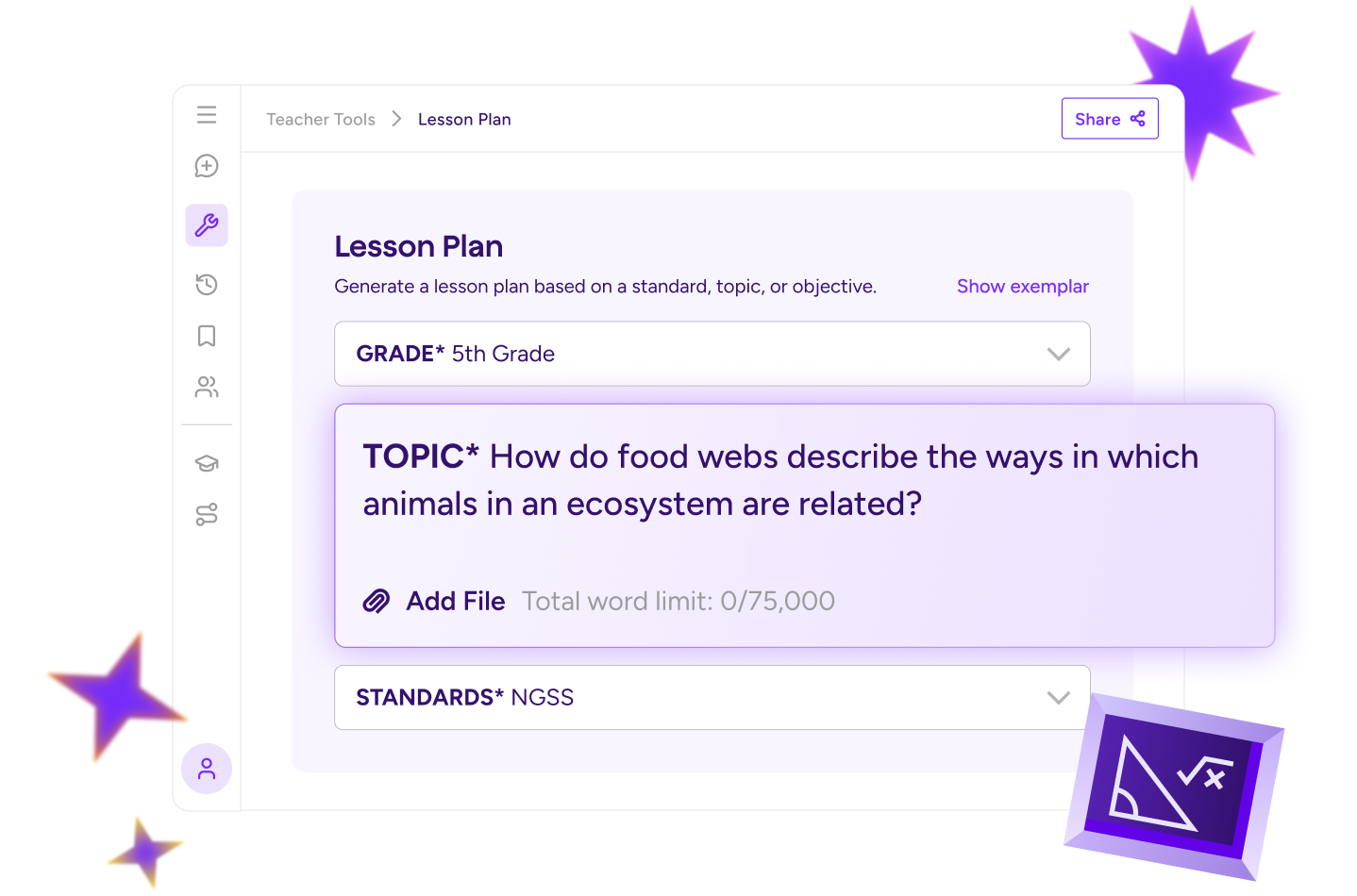
The provider describes inputs such as grade, subject, time, standards and learning goals. Check that the proposed activity actually develops the named skill; a standard appearing in the heading is not enough. Source ↗
2. Rubric generator
A structured rubric can be a useful draft. Replace vague descriptors such as good understanding with observable evidence, and make sure a learner could distinguish adjacent achievement levels. Source ↗
3. A broader teacher workspace
The teacher offering covers preparation, differentiation, assessment and communication. Select the tools needed for one recurring task instead of judging usefulness by catalogue size. Source ↗
A closer look at MagicSchool
These provider illustrations show the documented planning flow. They introduce what to evaluate; they are not evidence of lesson quality. For a fair trial, keep the same topic and learning objective throughout.
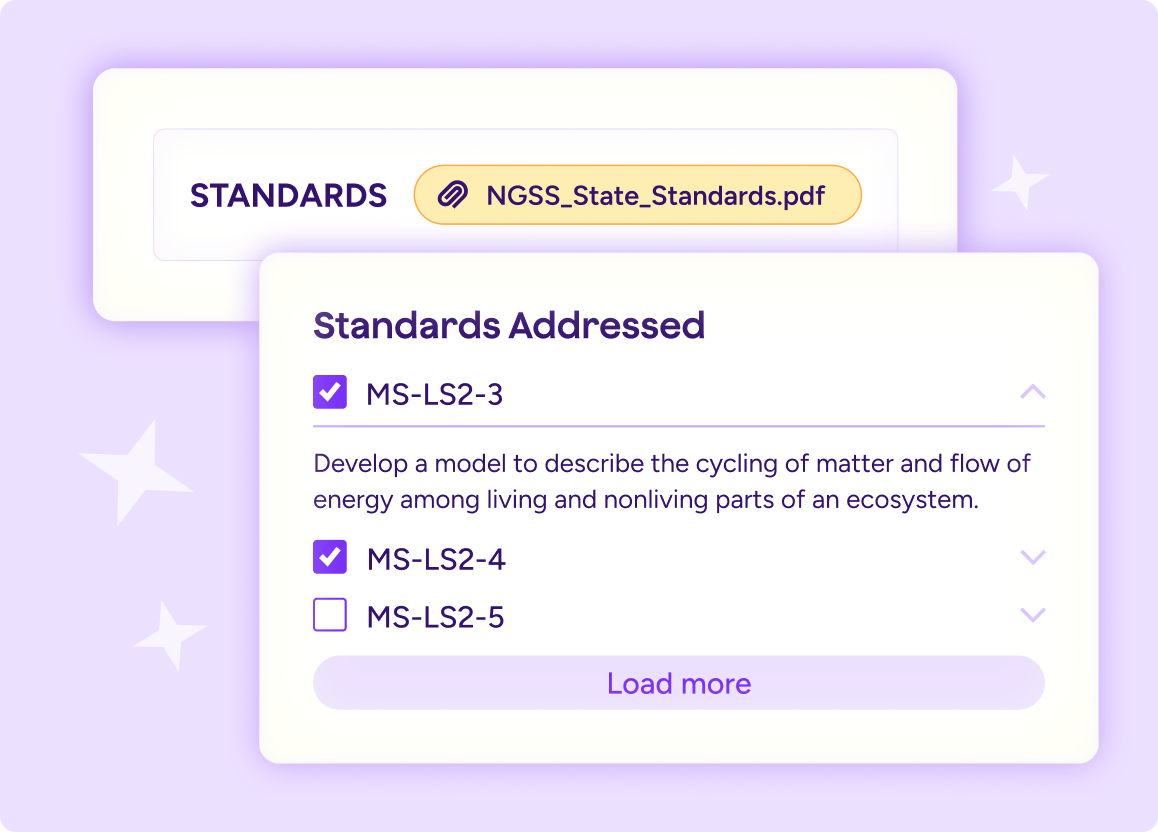
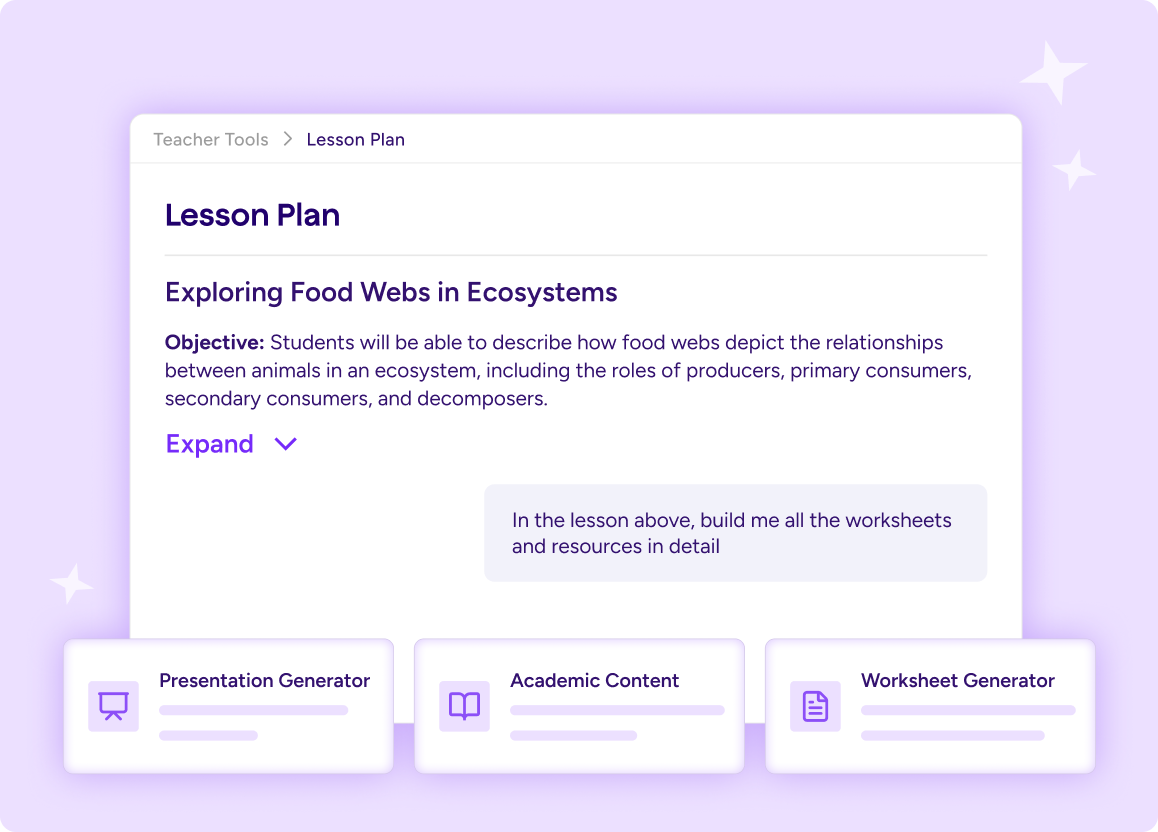
Visuals © provider / respective owners. Official source ↗ Vendor examples are not evidence of measured performance.
Practical workflows to evaluate
These are suggested evaluations, not tests we performed. Use material you own or have permission to share.
Audit one familiar lesson
Use a non-sensitive topic you know well. Specify a 40-minute lesson, one objective, prior knowledge, materials available and a short assessment. Request a draft, then compare it with your own lesson.
Evaluate: Record factual corrections, missing prerequisite steps and estimated activity durations. Keep the original draft and corrected version. Count preparation plus review time; do not count generation time alone.
Check a differentiated version
Start with the same objective and request an adaptation for learners who need additional vocabulary support. Do not include student names, diagnoses or individual records.
Evaluate: Check whether the adaptation preserves the intellectual task rather than merely shortening it. Ask whether a learner can still demonstrate the same core understanding.
Review a rubric before sharing it
Use a fictional assignment and a simple four-level rubric. Create two short fictional responses with a clear difference in quality, then inspect the descriptors manually.
Evaluate: Look for overlapping levels, criteria unrelated to the objective and language a student cannot act on. Keep assessment decisions with the responsible educator.
Plans, allowances and value
The current official matrix distinguishes Free, Plus and Enterprise. Plus is advertised at US$12.99 monthly or US$8.33 per user per month when billed annually. Enterprise uses custom pricing. This was checked on 16 October 2026; currency, taxes, offers and entitlements may change. Compare the actual matrix before payment rather than assuming every education feature is part of the free account.
| Option | What to check | Decision rule |
|---|---|---|
| Free | US$0; confirm the allowances and features needed for your trial | Begin with occasional preparation and a defined evaluation task. |
| Plus | US$12.99 monthly or US$8.33/user/month billed annually; the matrix lists expanded generation, history and editing | Upgrade only if the specific restriction you encountered justifies the recurring cost. |
| Enterprise | Custom quote; institution-level configuration, management and integration needs | Ask for the actual deployment scope and written responsibilities before school-wide use. |
Check official plan details ↗ Confirm your billing interval, currency, applicable tax, renewal terms and feature availability before subscribing. Promotional prices can differ from renewal prices.
Limits, privacy and responsible use
A lesson can be well formatted while containing an incorrect example, an unrealistic timetable or an assessment that tests a different skill. Those are the first things to inspect. An activity that works for one teacher may depend on materials, language proficiency or prior knowledge that another class lacks. Explain those constraints in the input and keep them visible during review. We have not run classroom trials, tested output accuracy, measured learning gains or checked every supported subject and language. The workflows above are proposed evaluation methods. Do not read vendor testimonials, promotional graphics or this research-based review as independent evidence that the tool will improve your class. Use a small controlled comparison and retain disappointing results as well as successful ones.
MagicSchool publishes privacy and safety documentation and links to its terms, student-data policy and subprocessor information. Its teacher page states that teacher and student data are not used for AI training. This is a provider statement, not our audit of its systems. School-specific approval, retention, access and contractual requirements still need review. For an initial trial, use invented examples or approved public material. Do not paste identifiable student work, individual education records or confidential school information simply because a tool presents an education label. Identify who may see a student conversation, who can delete it, and what happens when an account is closed. Verify the actual agreement and institutional process before enabling student access.
Documentation establishes advertised capabilities, not accuracy on your task. We have not measured speed, reliability, time savings or business outcomes. Keep an accountable person responsible for approval.
Alternatives worth comparing
Compare the job you need done rather than assuming every AI tool is a direct replacement. These are workflow alternatives, not a performance ranking.
Consider it if you repeatedly assemble lessons, feedback criteria or differentiated materials and can explain what a good result looks like. An experienced subject teacher is better placed to judge a plausible but unsuitable activity than someone relying on the generator to supply subject knowledge. A department should choose a common evaluation task before buying several subscriptions. It is less compelling when your existing resources already cover the unit well, or when a narrower tool solves your recurring task with fewer steps. For student-facing use, involve the institution’s designated approver and check the actual plan and permissions first. Our recommendation is to evaluate preparation with non-sensitive examples before considering a wider deployment. The alternative cards link to separate research-based education reviews. They do not establish a tested ranking or a hands-on comparison.
Common questions
Is MagicSchool free?
The official page offers a Free plan, alongside paid Plus and custom-priced Enterprise options. Check the feature matrix for the exact task you need; free access does not establish access to every classroom feature.
How much does MagicSchool Plus cost?
On 16 October 2026 the official page lists US$12.99 per month, or US$8.33 per user per month billed annually. Verify the checkout total, taxes and renewal terms directly with the provider.
Can I use a generated lesson without reviewing it?
We would not recommend that. Check subject facts, prerequisite knowledge, activity timing and whether the assessment measures your objective before sharing the material.
Does this review include firsthand classroom testing?
No. It is based on the linked official documentation and our editorial evaluation framework. The suggested trials describe what a teacher could test; no measured results are claimed.
Which education alternatives should I compare?
Diffit is relevant to adapting instructional resources; Brisk Teaching to assistance in existing browser workflows; Khanmigo to Khan Academy-linked teaching and guided tutoring. Our directory profiles describe these distinctions without declaring a tested winner.
Have you tested and rated this tool?
This is a research-based assessment of official documentation. We have not recorded hands-on tests or assigned a numerical score. The recommendations explain suitability and trade-offs.
Sources and review method
We reviewed official product and plan information on 16 October 2026. Suitability judgments and suggested trials are our editorial assessment. Media is credited to its provider and does not establish hands-on testing. Features, prices and rollouts can change.
- MagicSchool product overview
- Teacher offering
- Lesson-plan generator
- Rubric generator
- Official pricing matrix
- Privacy and safety documentation
- Official certification and learning resources
No affiliate tracking has been added to these links. Editorial responsibility: AI Tools Hotlist editorial desk. Editorial standards · Suggest a correction · More reviews.
Detailed editorial notes
MagicSchool is worth considering when you want a teaching-focused starting point for lesson preparation rather than a blank general-purpose chat. The buying decision is less about how many generators it offers and more about whether a draft fits your curriculum, how much correction it needs, and which plan supports your intended classroom workflow.