
Diffit is a focused option for teachers who repeatedly adapt teaching materials. Its strongest reason to enter a shortlist is a recurring resource-preparation problem, not a promise that generated worksheets will automatically suit every learner. Start with a lesson objective and inspect the meaning of the adapted material before judging its presentation.
Documentation-based assessment · How we reviewed it
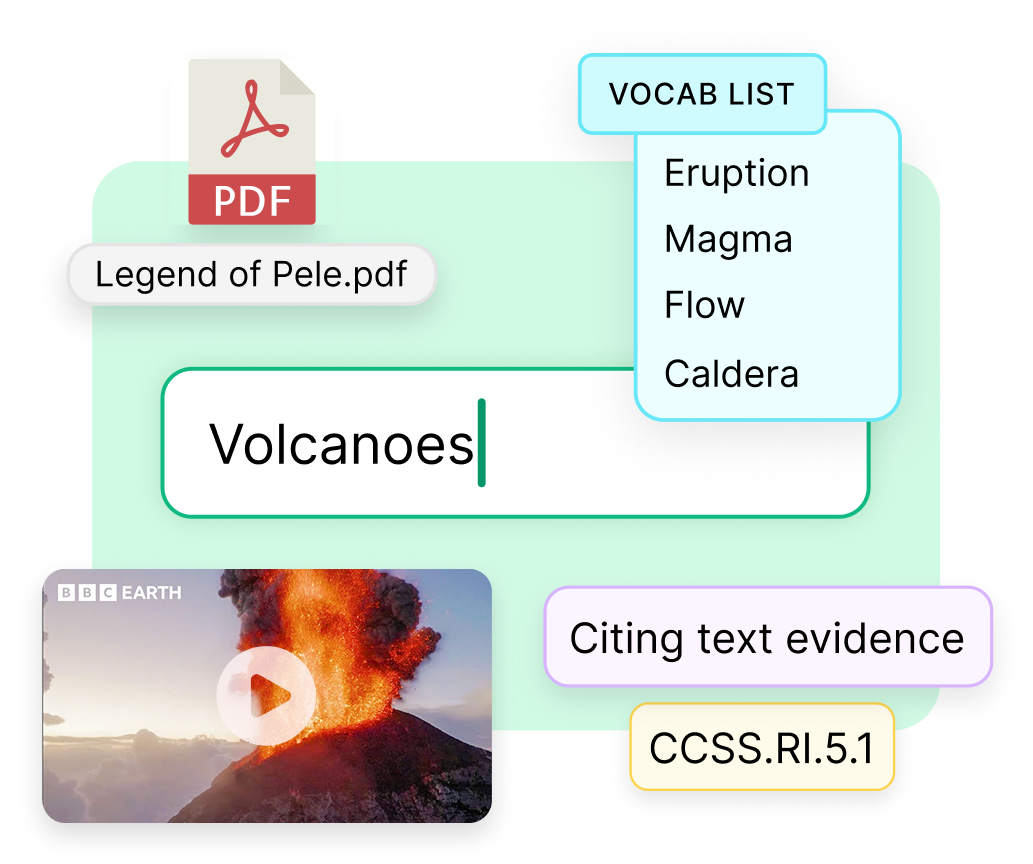
Official demo / learning resources ↗
Shortlist it when adapting resources is the recurring job
Consider Diffit if producing several usable versions of a resource consumes your preparation time. Test whether the versions preserve the same important ideas, not just whether the language becomes shorter. It is a different purchase from a student chatbot. Our assessment is based on official documentation and an editorial evaluation framework; no classroom results or time-saving measurements are claimed.
- Best fit
- Teachers adapting resources around a shared learning objective
- Review scope
- Teacher-created resources and differentiated instruction
- Main watch-out
- An easier text can accidentally remove the concept you intended to teach.
In this review
Who should consider Diffit?
A subject teacher, intervention specialist or department preparing resources for mixed support needs has a clear reason to evaluate Diffit. Begin with material whose meaning you can judge independently. It is less persuasive if you already have a strong differentiated resource bank, or if your main requirement is supervised live tutoring rather than resource preparation. Compare the same small task with MagicSchool and Brisk Teaching, recording correction time and export friction. Use Khanmigo as a comparison only when guided learning is part of the requirement: it is not an equivalent print-resource workflow. The best choice is the smallest reliable process that solves the actual preparation problem.
Why shortlist it
- A focused preparation workflow can make the evaluation task easy to define.
- Teacher review can happen before students receive the material.
- Print-oriented resources can support an activity without requiring every learner to use an AI chat.
- A free starting point allows a limited resource trial.
What to watch
- Rewriting can alter a fact, qualification or intended level of reasoning.
- A worksheet and its answer key may share the same underlying error.
- Export and history restrictions matter after the initial trial ends.
- Our research does not validate reading-level accuracy or educational outcomes.
Features that matter in daily work
The official workflow starts with a topic or existing material, allows a teacher to shape the resource, then supports printing or sharing. That puts the teacher between generation and classroom use. Keep that review step: a neat handout is not evidence of factual accuracy or appropriate instructional difficulty. Official product details ↗
1. Adapt instructional content
Diffit describes topic- and source-based creation with options for challenge, language and scaffolding. Check that important vocabulary and reasoning survive the adaptation. Source ↗
2. Create a resource set
Official quick-start examples include passages, exit tickets, lesson kits and other formats. Generate only the pieces you need and check their consistency with one another. Source ↗
3. Edit and export
The pricing page distinguishes Basic printing/PDF capabilities from broader paid exports. Test the exact destination your school uses before adopting it. Source ↗
A closer look at Diffit
The provider visuals introduce the documented workflow. Use the suggested trials below to examine your own task; these images do not establish performance, safety or learning outcomes.
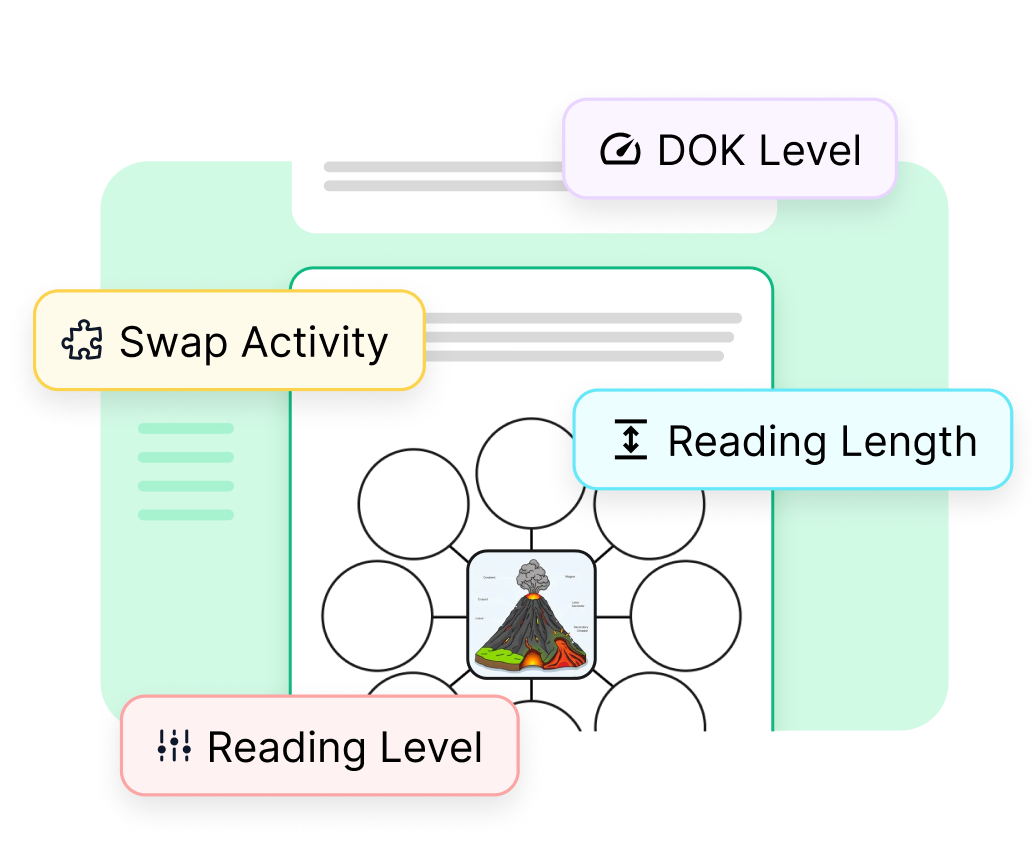
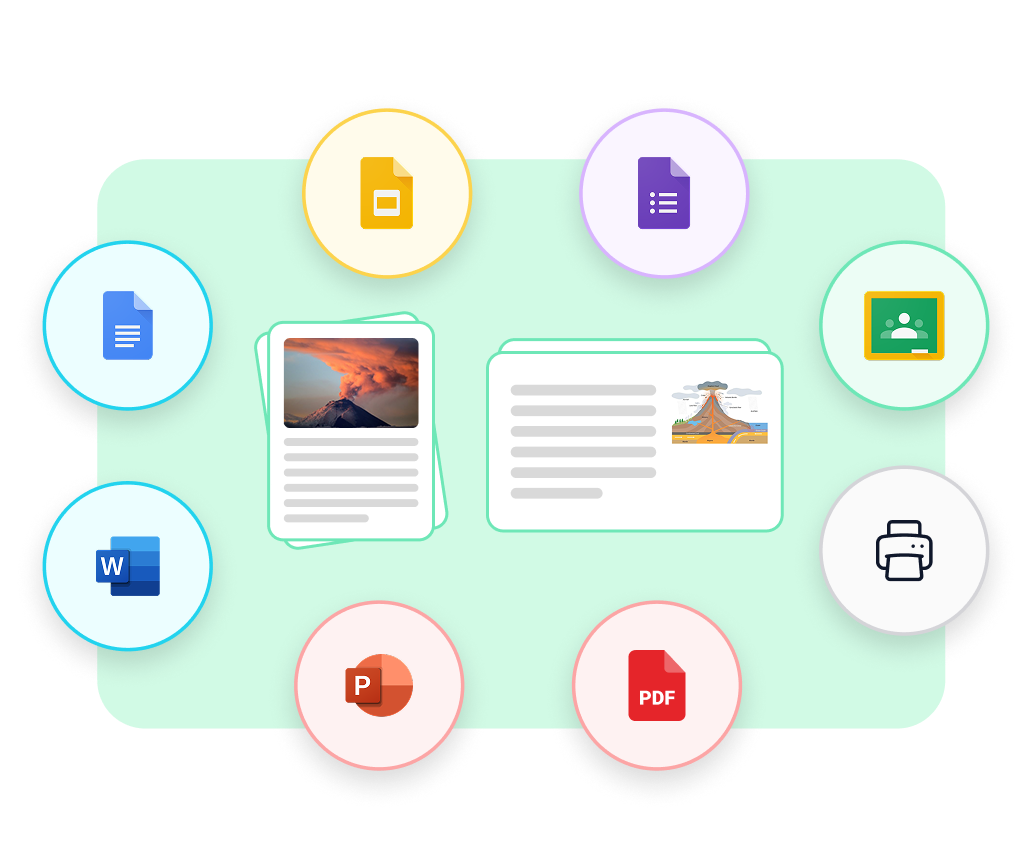
Visuals © provider / respective owners. Official source ↗ Vendor examples are not evidence of measured performance.
Practical workflows to evaluate
These are suggested evaluations, not tests we performed. Use material you own or have permission to share.
Preserve meaning across versions
Use a short passage you are permitted to adapt. List five facts and one inference the lesson depends on, then prepare two versions for different support needs.
Evaluate: Check all six requirements manually. Record lost qualifications, changed relationships and vocabulary that became misleading.
Audit a question set
Ask for a short comprehension activity and answer key from that passage. Include one literal question and one inference question in your own checklist.
Evaluate: Verify that each answer is supported and that an inference is not simply copied from a sentence. Keep ambiguous questions out of the final handout.
Test the classroom handoff
Export one resource to the format you normally use and print a sample. Edit a heading and answer choice after export.
Evaluate: Check page breaks, accessibility, editable text and the time needed to repair formatting. Compare the final usable resource with your current process.
Plans, allowances and value
The official page lists Basic as free with limits, including a 90-day content history. The school offering adds capabilities such as wider exports and institutional support; school pricing is based on enrollment. Individual and district routes are also linked. No single universal paid price was independently established for this review. Check the current quote and the exact export entitlement.
| Option | What to check | Decision rule |
|---|---|---|
| Basic | Free, with limits and recent-content history | Use a small trial to check resource quality and PDF/print needs. |
| Individual paid option | Confirm current price, allowances and export scope directly | Consider only when a specific restriction prevents a useful recurring workflow. |
| School / district | Enrollment-based school pricing or a district quote; check shared access and history | Compare the total institutional workflow, support and contract scope. |
Check official plan details ↗ Confirm your billing interval, currency, applicable tax, renewal terms and feature availability before subscribing. Promotional prices can differ from renewal prices.
Limits, privacy and responsible use
Simpler wording is not necessarily better teaching. An adaptation can become easier to read while removing the causal relationship or subject terminology students need to learn. Retain a source copy and an explicit objective during review. Check examples and answer keys separately, especially in subjects where a small change alters the correct solution. This review does not establish output originality, reading-level calibration, translation quality or a reduction in teacher workload. To evaluate value, count the time spent checking and repairing the final resource, and include unsuccessful attempts. Treat a clear decision not to use a draft as a useful result of your trial.
Diffit presents itself as a teacher-facing service and states that students do not need logins. Its privacy materials describe its data practices. Those provider statements do not replace the school’s approval process or your responsibility for the material supplied. Start with public, licensed or fictional examples and avoid identifiable learner records. Check whether you have permission to adapt and redistribute a source. A publicly viewable article is not automatically licensed for every reuse. Confirm account access, deletion and retention arrangements before building a long-term resource library.
Documentation establishes advertised capabilities, not accuracy on your task. We have not measured speed, reliability, time savings or business outcomes. Keep an accountable person responsible for approval.
Alternatives worth comparing
Compare the job you need done rather than assuming every AI tool is a direct replacement. These are workflow alternatives, not a performance ranking.
A subject teacher, intervention specialist or department preparing resources for mixed support needs has a clear reason to evaluate Diffit. Begin with material whose meaning you can judge independently. It is less persuasive if you already have a strong differentiated resource bank, or if your main requirement is supervised live tutoring rather than resource preparation. Compare the same small task with MagicSchool and Brisk Teaching, recording correction time and export friction. Use Khanmigo as a comparison only when guided learning is part of the requirement: it is not an equivalent print-resource workflow. The best choice is the smallest reliable process that solves the actual preparation problem.
Common questions
Is Diffit a student AI chatbot?
Its documented emphasis is teacher preparation and adaptation of resources. That is different from inviting learners into a live AI tutoring session.
Can teachers use Diffit for free?
The provider lists a Basic free option with limits. Check the pricing page for the features and history you need after any trial.
Does every plan include editable exports?
Do not assume that. The pricing page distinguishes Basic PDF/print features from broader paid exports. Check your specific destination.
How should I evaluate differentiation?
Compare the adapted resource with an explicit learning objective and a list of important facts. Do not use shorter sentences as the only success criterion.
Have you tested and rated this tool?
This is a research-based assessment of official documentation. We have not recorded hands-on tests or assigned a numerical score. The recommendations explain suitability and trade-offs.
Sources and review method
We reviewed official product and plan information on 16 October 2026. Suitability judgments and suggested trials are our editorial assessment. Media is credited to its provider and does not establish hands-on testing. Features, prices and rollouts can change.
- Official product workflow
- Official pricing and access
- Quick-start resource examples
- Provider privacy information
No affiliate tracking has been added to these links. Editorial responsibility: AI Tools Hotlist editorial desk. Editorial standards · Suggest a correction · More reviews.